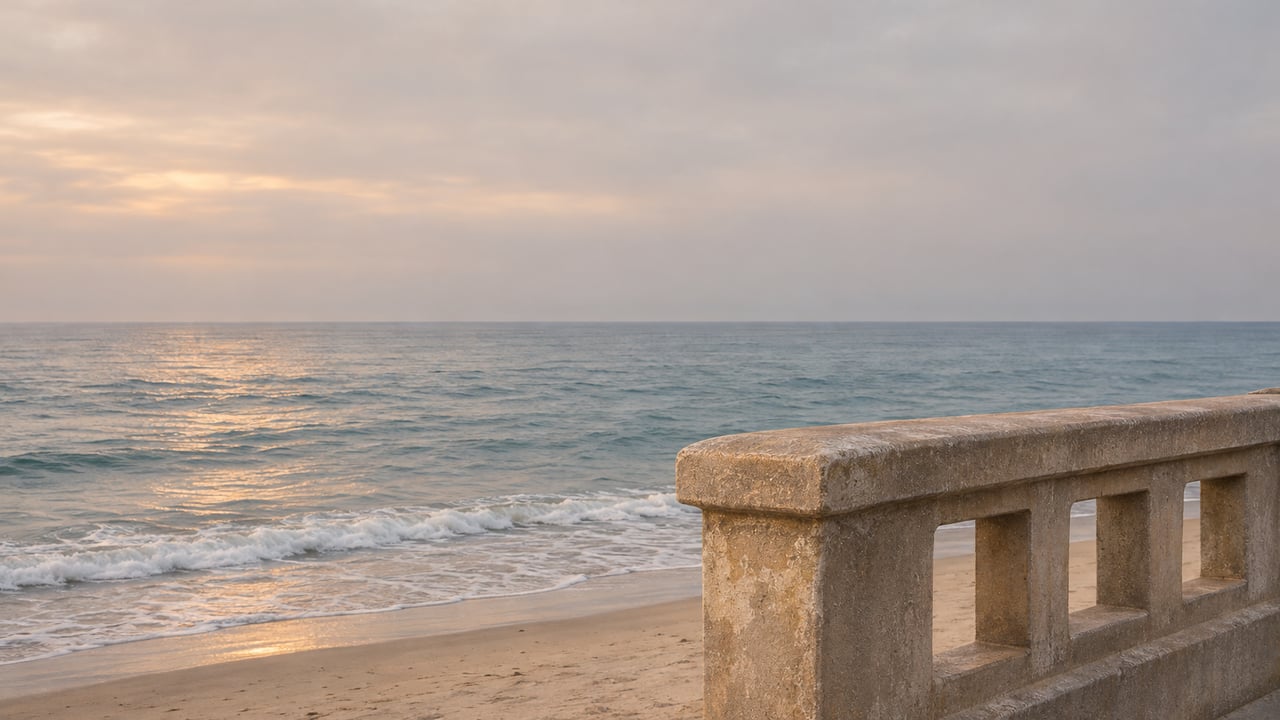
If you've been researching places to live in North County San Diego, chances are you've come across the question: "Is Oceanside safe?"
And depending on where you look for answers, you might get some wildly different opinions.
Some longtime San Diego residents still remember Oceanside as a rough-around-the-edges military town. Others see it as one of the most exciting coastal communities in Southern California, filled with trendy restaurants, independent coffee shops, art galleries, and beautiful beaches.
So, which version is accurate?
The truth is that Oceanside has changed tremendously over the past two decades. While certain areas still experience crime and other challenges, the city's reputation hasn't always kept pace with its transformation.
And just like Carlsbad, Encinitas, or any other city in San Diego County, where you live within Oceanside can make a big difference in your day-to-day experience.
Let's break down Oceanside neighborhood by neighborhood.
How Oceanside’s Reputation Took Shape.
To understand Oceanside today, it helps to understand its history.
Located just south of Marine Corps Base Camp Pendleton, Oceanside has long been associated with military life. For decades, its downtown catered heavily to service members, with bars, tattoo shops, inexpensive lodging, and businesses serving a young, transient population.
Like many Southern California cities, Oceanside also experienced periods of gang activity, property crime, and neighborhood disinvestment.
But Oceanside in 2026 is not the same Oceanside people remember from the 1990s or early 2000s.
Over the years, downtown redevelopment, new hotels, independent businesses, restaurants, and residential investment have helped reshape the city.
Today, you'll find everything from multimillion-dollar oceanfront homes to established suburban neighborhoods, townhomes, condos, and properties with larger lots.
That doesn't mean crime has disappeared. It means the old blanket advice to avoid Oceanside doesn't tell the whole story.
Oceanside Neighborhoods: What Buyers Should Know
1. Downtown Oceanside
Best for: Walkability, restaurants, nightlife, and beach access.
Downtown has experienced one of the most visible transformations in the city. New hotels, rooftop bars, restaurants, and independent businesses have turned it into a destination for visitors and locals alike.
With more nightlife, tourism, and pedestrian activity, buyers should consider noise, parking, and the potential for theft or other property crime. Conditions can vary from block to block.
My take: If you love being able to walk to coffee, dinner, and the beach, downtown deserves a look. Just remember that coastal convenience comes with an urban atmosphere.
2. South Oceanside (South O)
Best for: Coastal charm, local businesses, and a laid-back lifestyle.
South O has become one of Oceanside's most sought-after areas. You'll find charming older homes, renovated bungalows, neighborhood coffee shops, and restaurants along South Coast Highway.
Its proximity to the beach and Carlsbad Village makes it especially appealing to buyers who want coastal living without necessarily paying Encinitas prices.
Residential streets can feel very different from the busier commercial corridor, so it's worth exploring both.
My take: South O is a great example of how Oceanside's identity has evolved while maintaining its original character.
3. Fire Mountain
Best for: Larger lots, established homes, and a residential setting.
Located east of Interstate 5, Fire Mountain offers a different atmosphere from downtown Oceanside.
The neighborhood is known for winding streets, mature landscaping, larger properties, and some homes with ocean views.
Many streets have relatively little through traffic, although road layouts, lighting, and access vary throughout the neighborhood.
My take: Fire Mountain is worth exploring if you want to be close to the coast but prefer a quieter residential environment.
4. Rancho Del Oro
Best for: Suburban living, parks, and planned communities.
Rancho Del Oro offers a more traditional suburban lifestyle, with planned residential developments, parks, and convenient access to shopping and major roads.
Compared with the downtown area, many streets have less nightlife and tourist activity.
Buyers should still evaluate individual properties, traffic patterns, parking arrangements, and current crime information.
My take: If you love the idea of Oceanside but don't necessarily need to live within walking distance of the beach, Rancho Del Oro is worth considering.
5. Arrowood and North Valley
Best for: Newer suburban homes, open space, and golf-course surroundings.
In northeastern Oceanside, Arrowood is known for newer residential developments and its golf course.
The broader North Valley area includes a mix of established communities, newer housing, and open spaces.
Some neighborhoods offer a more secluded residential setting, but that alone doesn't establish a lower crime rate.
My take: These areas appeal to buyers looking for more space and a suburban environment while remaining within Oceanside city limits.
6. Ocean Hills and Rancho Pacifica Area
Best for: Established residential communities and access to nearby amenities.
Southeastern Oceanside includes neighborhoods with a mix of single-family homes, townhomes, and age-restricted communities, including Ocean Hills Country Club.
Certain developments have controlled or gated entrances, which may influence residents' sense of privacy, although gates don't guarantee security.
My take: This part of Oceanside is often overlooked by buyers who only associate the city with its downtown and beachfront neighborhoods.
7. Eastside Capistrano and Central Oceanside
Best for: Buyers interested in established neighborhoods, older homes, and renovation opportunities.
Eastside Capistrano is a historic neighborhood east of downtown, with deep community roots and a mix of longstanding residences and newer investment.
Some parts of central Oceanside have historically faced challenges involving crime and disinvestment. However, those histories shouldn't be used to judge every street or property today.
Buyers should review recent incident reports, visit specific blocks, and consider the condition of surrounding infrastructure.
My take: These neighborhoods deserve an individual, street-by-street evaluation rather than an automatic dismissal based on an old reputation.
What Do Oceanside's Actual Crime Statistics Say?
Here's where things get interesting.
According to the Oceanside Police Department, overall reported crime has declined significantly in recent years.
Reported crime trends, 2021–2024
-21%
Total Group A offenses
-13%
Property crime rate
-55%
Crimes against society
Source: Oceanside Police Department, August 2025, citing SANDAG criminal justice statistics.
These improvements are encouraging, but they don't mean every neighborhood has experienced the same changes or that crime is no longer a concern.
In fact, the best way to understand safety in Oceanside is to look at current crime reports for the specific neighborhood, street, and property you're considering.
The Oceanside Police Department provides both neighborhood crime statistics and an interactive crime mapping tool.
You can access these resources here:
Oceanside Police Department Crime Statistics
How to research a neighborhood
For households with children, factors worth considering include proximity to parks, school options, traffic, walkability, and access to activities.
Rather than labeling one neighborhood as safe and another as unsafe, I encourage buyers to think about what they want their everyday life to look like.
Do you want to walk to the beach? Would you rather have a larger backyard? Is being close to the freeway important for your commute?
Those questions can help narrow your search before reviewing neighborhood-specific safety information.
Camp Pendleton’s Role in Oceanside’s Identity
One of the more persistent misconceptions about Oceanside is that its proximity to Camp Pendleton automatically makes it a dangerous place to live.
Camp Pendleton has certainly influenced the city's history, economy, and identity. But proximity to a military installation is not, by itself, evidence that a neighborhood has a higher crime rate.
Oceanside's military connection is also part of what makes the community unique. Military households have contributed to the city's businesses, housing market, and culture for generations.
Buyers should evaluate current local crime data rather than assuming the city's military presence determines its safety.
How to Research a Neighborhood Before Buying in Oceanside
If you're considering purchasing a home in Oceanside, I recommend doing a little homework beyond scrolling through online reviews.
- Review current crime maps. Look at recent incidents near the specific property and distinguish property crimes from violent crimes.
- Visit at different times. A neighborhood can feel different on a weekday morning versus a Saturday evening.
- Explore the surrounding streets. Drive or walk several blocks in each direction to understand traffic, parking, lighting, and activity.
- Research local schools and amenities. Confirm school assignments by property address and explore nearby parks, shopping, and recreation.
- Talk to residents. Firsthand perspectives can provide useful context, although personal experiences should be considered alongside objective information.
For neighborhood boundaries, the City of Oceanside also offers an official neighborhood mapping resource.
The Bottom Line: Is Oceanside a Good Place to Live?
Oceanside deserves a fresh look, especially if your impression of the city comes from stories that are 15 or 20 years old.
The downtown transformation, thriving local restaurant scene, arts community, and continued residential investment have helped Oceanside develop an identity that extends well beyond its military roots.
At the same time, it would be misleading to suggest that every part of Oceanside has the same safety profile.
That's why I believe the better question isn't simply, "Is Oceanside safe?"
It's "Which Oceanside neighborhood best fits my lifestyle, and what do the current facts tell me about that particular area?"
As a San Diego local and North County real estate agent, I've watched Oceanside evolve into a community with a lot to offer. Whether you're looking for a coastal bungalow, a home with more space, or a property close to restaurants and nightlife, there's much more to explore here than its old reputation suggests.
Thinking about moving to Oceanside? I'd love to help you explore its neighborhoods, compare available homes, and find the area that best fits your goals.